
RESEARCH & DEVELOPMENT
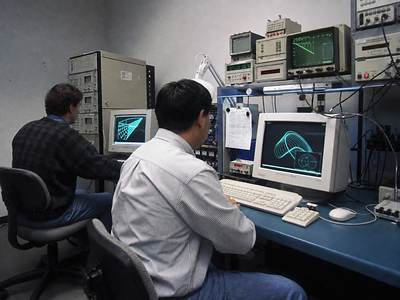
Sinneslöschen research and advanced development programs support long-term product planning in semiconductors, display technology, signal processing, system architecture and human-machine interaction.
Most research activities are conducted at the Sunnyvale Research & Development Center in cooperation with product engineering groups, selected customers and academic institutions. Programs range from near-term component development to experimental systems intended to evaluate technologies before commercial application.
Results may be transferred into standard products, incorporated into OEM programs or retained for continued internal study.
Semiconductor Architecture
Research focuses on processor integration, peripheral control, memory interfaces and specialized circuitry for technical computing and embedded applications. Current areas include embedded processor architecture, integrated peripheral functions, deterministic control systems, memory-interface design, device reliability and extended-temperature operation.
Display Systems Laboratory
Develops technologies for technical visualization, display control and specialized graphical processing. Work includes raster and vector display methods, display timing, frame-buffer architecture and hardware-assisted geometric operations. Current programs include vector/raster processing, geometric transformations, high-resolution timing, technical color systems, multi-display synchronization and display-system validation. The laboratory maintains experimental hardware representing both current and previous VDP architectures.
Signal Processing
Addresses acquisition, conditioning and interpretation of electrical signals used in instrumentation, control and technical measurement systems. Areas include noise reduction, filtering, signal conditioning, event detection, sampling methods, real-time measurement and synchronization of multiple data sources. Research in this area continues the engineering principles that influenced the original Sinneslöschen name.
Human Factors Engineering
Evaluates interaction between operators and technical systems with particular emphasis on readability, response time, workload and sustained operation. Research areas include display readability, control placement, operator response, visual fatigue, information density, alarm presentation, repeated task performance and human-machine response under extended operating conditions.
Systems Architecture
Examines methods for integrating processing, communications, display and interface hardware into reliable technical platforms. Programs include modular system design, bus architecture, fault isolation, interface standardization, distributed equipment control and compatibility between legacy and current hardware.
Experimental Systems
Provides engineering groups with prototype platforms used to evaluate new components, display technologies, interface methods and system configurations before formal product development. Experimental systems may include modified standard hardware, prototype circuit assemblies, temporary software environments, custom interfaces and limited field-evaluation units. Experimental platforms are not necessarily assigned commercial product numbers and may be documented separately from standard catalog products.
Research & Development Milestones
1962 — Transistorized Control Development
Engineering work expands beyond electromechanical instrumentation into transistorized control circuits, logic modules and specialized signal-processing equipment. Early programs focus on reliability, reduced component count and adapting electronic control methods to industrial environments. This work establishes design practices later carried into modular control and instrumentation products.
1971 — Sunnyvale Advanced Engineering
The recently established Sunnyvale operation assumes an increasing role in digital electronics, semiconductor applications, display technology and advanced circuit development. Engineering groups work closely with semiconductor suppliers and OEM customers while evaluating integrated-circuit technologies. Sunnyvale also becomes an important recruiting center for engineers in computing, digital logic and display systems.
1974 — Research Activities Consolidated in Sunnyvale
Following the transfer of Corporate Headquarters to Sunnyvale, advanced engineering and research activities are increasingly concentrated there. Glover continues prototype manufacturing, testing and production engineering while Sunnyvale assumes primary responsibility for long-range system development and new technology evaluation.
1978 — Technical Display Research Expanded
Sinneslöschen expands work in programmable display control, vector graphics, CRT timing and specialized visualization systems. Programs examine stable technical graphics at higher resolutions and integration of display-processing hardware with instrumentation and control systems. This contributes to later VDP processors and early SV systems.
1980 — Human Factors Engineering Program Established
Formal studies begin examining operator-interface layout, visual information presentation, response measurement and sustained use of technical display systems. The program combines engineering, instrumentation and controlled user testing. Laboratory equipment includes specialized control interfaces, event-recording hardware and response-measurement systems.
1985 — Modular Systems Architecture
Research contributes to introduction of SSB-1. Development emphasizes repeatable electrical interfaces, replaceable modules and standardized integration for equipment expected to remain in service for extended periods. Later programs focus on interoperability, diagnostics, field service and compatibility.
1993 — Visualization & System Integration Programs Expanded
Programs increasingly combine technical visualization, data acquisition, modular hardware and workstation-based processing. SSB-2E supports larger laboratory and industrial configurations while workstation systems assume a greater role in display processing, simulation and data analysis.
1997–1998 — Current Research Programs
Current activities include integrated semiconductor architecture, high-performance display processing, technical visualization, signal acquisition and processing, human-machine interface evaluation, PCI/SSB integration and experimental electronic systems. Programs range from near-term product work to exploratory systems.
Selected Research Notes & Papers
| Code | Title | Authors / Laboratory | Year / Status |
|---|---|---|---|
| RN-98-014 | Deterministic Bus Timing in Mixed PCI/SSB Systems | Raymond T. Keller; Mark J. Holloway — Systems Architecture Group | 1998 — AVAILABLE |
| RN-97-031 | Hardware-Assisted Geometric Operations for Technical Displays | Dr. Helen A. Voss; Peter Lang — Display Systems Laboratory | 1997 — AVAILABLE |
| RN-96-022 | Visual Density and Operator Recognition Time | Susan E. Harrow; Miriam Cho — Human Factors Engineering | 1996 — AVAILABLE |
| RN-94-018 | Long-Duration CRT Viewing in Industrial Monitoring Applications | Miriam Cho; Alan R. Beck — Human Factors Engineering | 1994 — AVAILABLE |
| RN-92-007 | Synchronization of Multiple Visual Data Sources | Dr. Helen A. Voss; Thomas Neumann — Display Systems Laboratory | 1992 — AVAILABLE |
| RN-89-026 | Adaptive Sampling Methods for Instrumentation Systems | Peter Lang; Raymond T. Keller — Signal Processing Group | 1989 — INDEX + ABSTRACT |
| RN-86-011 | Operator Response to Multi-State Alarm Displays | Susan E. Harrow; James L. Corbett — Human Factors Engineering | 1986 — INDEX + ABSTRACT |
| RN-83-019 | High-Frequency Display Environments and Perceived Image Stability | Dr. Helen A. Voss; Alan R. Beck — Display Systems Laboratory | 1983 — INDEX ONLY |
RN-83-019: Abstract not transferred to online service.
Publication Policy
Sinneslöschen research publications are distributed according to technical relevance, contractual restrictions and document availability. Online records may contain complete technical papers, abstracts only, bibliographic indexes or references to documents available through Documentation Services. Research performed under customer or OEM agreements may not be available for public distribution.